Responsibility for Creation Unites the Churches
News
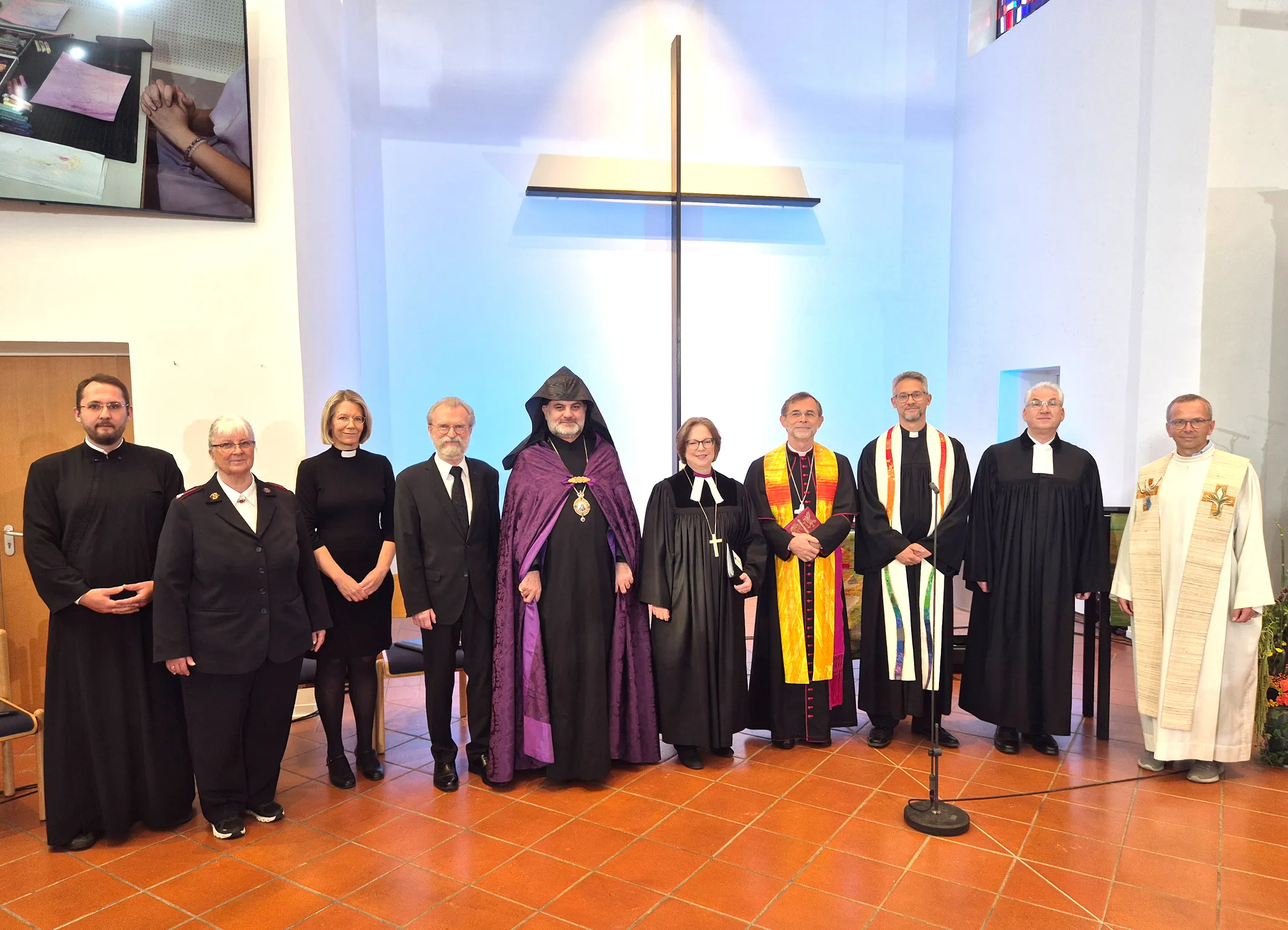
The Ecumenical Council's (ÖRKÖ) worship service for the Season of Creation was broadcast live on September 20 from the EmK in 1150 Vienna.
Watch the ecumenical serviceWe need each other.
We listen to one another.
We pray together.
And together, we share responsibility for God’s creation.
Pause and Turn Around
The invitation to pause, turn around, and learn anew to live gratefully as part of God’s creation was the focus of the official worship service held by the Ecumenical Council of Churches in Austria (ÖRKÖ) for Creation Time. The service, held on Sunday at the Methodist Church in Vienna-Rudolfsheim-Fünfhaus, was broadcast live on ORF III and on ORF regional radio stations. Its theme was “What Is Man?” In his remarks, ÖRKÖ President Bishop Tiran Petrosyan said: “Man is not the master of all things. Man is a creature of God. A creature that can go astray. A creature that can turn back. And a creature that can learn to live in community—with God, with other people, and with all of creation.”
Those who view creation merely as a resource—as something to be used, consumed, and possessed—lose something essential: the awareness of being part of that creation themselves: “Human beings do not stand outside of creation. We are earth and breath. We depend on water, on food, on air, on other people. Our lives are interconnected,” said Petrosyan.
That is why the question “What is a human being?” is also an ecumenical question. For no church can answer this question alone, said the ÖRKÖ chair: “We need one another. We listen to one another. We pray together. And we share responsibility for God’s creation.”
“A Community of Sincere Care”
The biblical parable of the “Prodigal Son” or “Merciful Father” was the focus of the worship service. In her remarks, Protestant Bishop Cornelia Richter centered on the forgiving father and the father who turns toward his repentant son, saying: “How wonderful it would be if we were to live out this community of sincere care in our churches and far beyond—out there on the streets and in the squares, in cities and rural areas, in regions, states, and nations—how wonderful it would be if this community of sincere care were to become our shared way of life.” Then moments of reflection and forgiveness would be possible.
The bishop was convinced that these are possible in God’s creation: “Just as nature can regenerate itself with astonishing speed, so can we regenerate ourselves in our humanity: anew each day, simply by turning back, forgiving one another, and paying attention to what has been given to us: plants, animals, and our fellow human beings.” Postscript: “For we are—thank God—part of His creation.”
“A Humanitarian Image of God”
Looking to the merciful Father at the heart of the biblical parable, “a ray of hope shines through,” Archbishop Grünwidl emphasized in his reflection. The father runs to meet the younger son, who has returned home to apologize, and embraces him. He goes out to the stubborn older son and patiently speaks kindly to him, said Grünwidl: “Jesus proclaims to us a God who reaches out and pursues us, who does not want to lose any of his children and who wants to celebrate with all his creatures.”
The biblical parable is about “a philanthropic image of God that should be at the center of our gallery of images of God” and an invitation to repentance: “A turning away from ‘I,’ ‘me,’ and ‘mine’ toward ‘you,’ ‘we,’ and ‘ours’; from consumption to preservation; from self-righteous correctness to mercy; from the fear of destruction to trust in the merciful God of life, who does not wish to lose his children and creatures, but rather to save and preserve them.”


Ecumenical Diversity
In addition to Petrosyan, Richter, and Grünwidl, those participating in the worship service included Methodist Superintendent Stefan Schröckenfuchs, Reformed Pastor Thomas Hennefeld, Orthodox Priest Cezar Marksteiner-Ungureanu, Shepherd Walter Hessler of the New Apostolic Church, Old Catholic Pastor Hannes Dämon, Major Heidi Oppliger of The Salvation Army, and Methodist Pastor Antje Klein. The two local congregations—the Vienna-Fünfhaus Congregation and the English-speaking Congregation (ESUMC)—also participated in the service.
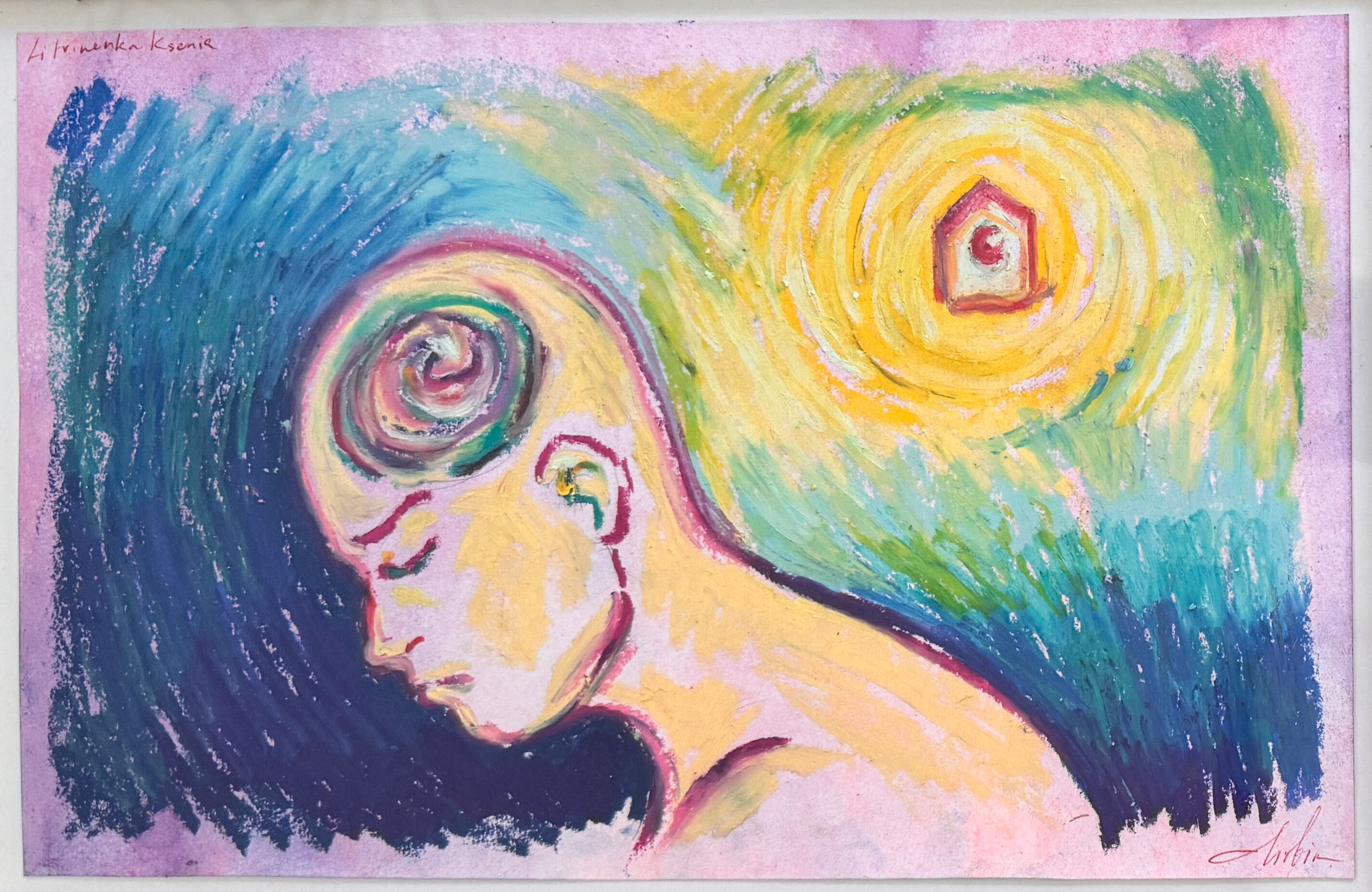
For both the TV audience and the worshippers in the church, the service featured a first: Artist Ksenia Lytvynenka created live drawings based on the biblical narrative as it was read.
Musical accompaniment was provided by the students and faculty of the Diocesan Conservatory of the Archdiocese of Vienna, as well as the “CCM Band,” under the overall direction of Michal Kucharko.
18 Member Churches of the Ecumenical Council
The Ecumenical Council of Churches in Austria (ÖRKÖ) comprises 18 churches: the Old Catholic Church, the Anglican Church, the Armenian Apostolic Church, the Bulgarian Orthodox Church, the Evangelical Church A.B., the Evangelical Church H.B., the Evangelical Methodist Church, the Greek Orthodox Church, the Coptic Orthodox Church, the Roman Catholic Church, the Romanian Orthodox Church, the Russian Orthodox Church, the Serbian Orthodox Church, and the Syriac Orthodox Church. The Ethiopian Orthodox Church, the Federation of Baptist Churches, the Indian Orthodox Church, and the New Apostolic Church are “members with advisory status.” Other institutions and organizations hold observer status.
Quellen: Kathpress; EmK; oekumene.at
Gruppenfoto: Uschmann/epdÖ, EmK.
Zeichnung von Ксения Литвиненко, Foto EmK. Die Verwendung, Vervielfältigung oder Verbreitung dieses Bildes ohne ausdrückliche Zustimmung ist nicht gestattet.